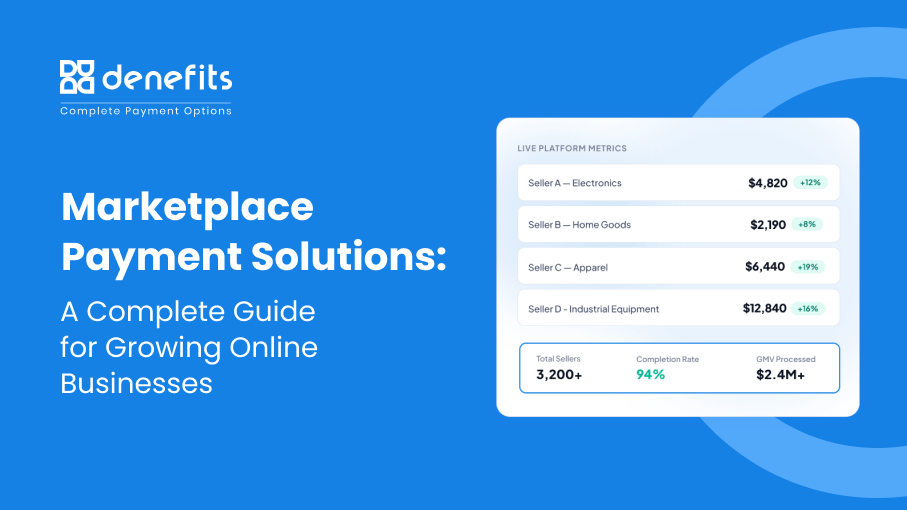
Building a successful digital platform requires balancing user experience with reliable backend operations. Utilizing a specialized marketplace payment solution platform helps streamline payout structures, automate compliance, and simplify day-to-day transactions.
What Is a Marketplace?
A marketplace connects buyers and sellers on a single platform. It doesn't own inventory or deliver services itself—think Amazon, Etsy, Airbnb, or Uber.
This is a many-to-many model with multiple buyers and sellers. The platform earns money by charging commissions, subscription fees, or listing fees for connecting the two sides.
What Are Marketplace Payment Solutions?
Marketplace payment solution are the tools that handle money between multiple parties.
Standard payment systems only process payments between one seller and one buyer. Marketplaces are different. They send money to three or more parties for a single sale. They also hold and split funds automatically.
This process requires a few key steps:
➡ Split payments: Automatically dividing each sale between the platform and the seller (for example, a 90/10 split).
➡ Escrow: Holding the buyer’s money until the product is delivered or the service is done.
➡ Marketplace payouts: Sending scheduled payments to many different sellers at once.
➡ Seller onboarding (KYC): Verifying every seller's identity on the platform to prevent fraud.
➡ Multi-party compliance: Handling taxes, fraud rules, and government regulations for all sellers.
➡ Cross-border payments: Allowing buyers and sellers to trade in different currencies and countries.
➡ Dispute and refund handling: Automatically routing refunds and chargebacks to the correct seller.
How Do Marketplaces Handle Payments?
Marketplaces do not process payments like regular stores. Instead of a direct sale between one buyer and one seller, the platform routes a single payment to multiple people.
Here is how the payment flow works:
▶ The buyer pays the marketplace: The buyer sends money to the platform, not directly to the seller. The marketplace collects all payments first.
▶ Funds are held securely: The money stays in a temporary account (escrow) until the order is complete. This protects both sides. Buyers know they will get their item, and sellers know the money is real.
▶ The payment is split automatically: Once the job is done, software divides the money. The seller gets their share, the platform keeps its fee, and any partners get their cut.
▶ Sellers receive scheduled payouts: Instead of single deposits, the platform sends bulk payouts to thousands of sellers. Payouts can happen daily, weekly, or on demand.
▶ Background checks run automatically: Every seller must pass identity checks (KYC) before getting paid. The platform also manages tax forms and regulatory reports for all sellers.
▶ Disputes go to the right person: If a buyer asks for a refund or files a chargeback, the system figures out who is responsible and charges the correct party.
Essential Features to Look For in a Marketplace Payment Platform
When choosing a marketplace payment solution, focus on four key factors:
1. Geographic Reach
Make sure the provider supports the regions where your buyers and sellers live. They should accept popular local payment methods (like digital wallets or local bank transfers) and handle cross-border transactions in those specific markets.
2. Fee Structure
Look past the headline transaction rates. Compare all costs to protect your margins:
➡ Per-transaction fees: Usually a percentage plus a fixed dollar amount.
➡ Payout fees: Costs to transfer funds out to your sellers.
➡ Cross-border & FX fees: Additional charges for international cards or currency conversion.
➡ Administrative fees: Monthly platform access costs, API fees, and chargeback penalties.
3. Payment Options & Support
Pick a provider that makes tough tasks simple. They should handle escrow, split payments, and bulk payouts with ease. Look for an easy dashboard to manage refunds, disputes, and reports. Make sure they offer 24/7 customer support when you need help.
4. Compliance & Security
Choose a platform that handles legal rules for you. They must offer strong security (PCI compliance) and built-in fraud protection. They should also help you follow money laws in every country where you operate.
| Factor | What to Look For | Why It Matters |
|---|---|---|
| Coverage | Local currencies & payment methods | Boosts buyer conversion and seller retention |
| Fees | Transparent transaction, payout, & FX costs | Prevents unexpected hits to your revenue margins |
| Operations | Automated splits, escrow, clear dashboards | Cuts down manual work and admin overhead |
| Compliance | PCI compliance, fraud tools, regulatory support | Protects your marketplace from fraud and legal risks |
Emerging Trends Shaping Marketplace Payment Systems
▶ No-click flows: Payments happen automatically in the background as users navigate the app.
▶ Higher conversion: Buyers stay inside the app without interrupting their shopping experience.
▶ Reduced friction: Eliminating external payment pages reduces customer drop-off at checkout.
▶ Contextual payment triggers: Actions like biometrics, voice commands, or chat confirmations trigger purchases instantly.
▶ Unified cross-merchant profiles: Buyers save payment details once and check out across thousands of independent sellers.
▶ Lower fees: Cutting card network processing costs increases profit margins for platforms and sellers.
▶ Instant settlement: Sellers access their money on the same day instead of waiting 2 to 5 business days.
▶ Buy-side optimization: Smart AI agents automatically negotiate and complete purchases based on user preferences.
▶ Behavioral fraud screening: Machine learning analyzes typing speed and device habits to catch fraud accurately.
▶ Embedded credit: Platforms offer flexible payment plans directly on consumer carts and large B2B invoices.
▶ Digital wallets: Billions of people use digital wallets, making one-tap payments the new standard.
▶ Dynamic risk-based financing: Systems analyze live financial profiles at checkout to offer instant personalized payment plans.
Denefits: Smart, Flexible Payment Solutions for Marketplaces
Denefits helps online marketplaces solve major payment challenges. It combines smart payouts with flexible marketplace payment solution.
Beyond simple payouts, Denefits checks risk in real time. It also offers built-in monthly payment plans right at checkout.
This helps online businesses—such as SaaS platforms, coaching sites, and high-ticket service networks—close more sales and reduce abandoned carts. It also handles recurring payouts and recovers missed payments automatically, without extra work for your team.
Conclusion
Managing marketplace payments doesn't have to be complicated. With automated payouts, real-time risk checks, and flexible payment plans, Denefits simplifies financial operations so you can protect your revenue and scale faster. Upgrade your platform's payment experience today and keep your business moving forward smoothly.
Frequently Asked Questions (FAQs)
Q. How do marketplace payment solutions differ from traditional merchant accounts?
Standard merchant accounts process payments between one buyer and one business. Marketplace payment tools handle money for multiple parties at once. They automatically collect funds from buyers and hold them securely. Then, they split payouts between the platform and sellers based on set rules. They also verify seller identities (KYC), run payouts, and manage refunds across thousands of sellers.
Q. What seller compliance and verification requirements do marketplaces face?
Marketplaces are subject to strict regulatory oversight because they handle third-party payouts. Key requirements include:
- KYC/KYB (Know Your Customer / Business): Identity and anti-money laundering (AML) checks for every seller on the platform.
- PCI-DSS Compliance: Ensuring cardholder data is securely transmitted and stored.
- Tax Reporting: Managing regional and federal tax obligations (such as issuing 1099-K forms in the US) across all independent sub-merchants.
Q. How are refunds and disputes handled when multiple sellers are involved?
Marketplace payment systems process refunds and chargebacks automatically. When a buyer asks for a refund or files a dispute, the software checks who is responsible. It then takes the refund or dispute fees directly from that specific seller’s account balance.
Q. How does Denefits improve the marketplace checkout experience?
Denefits does more than basic payout routing. It adds smart checkout options, real-time risk checks, and monthly payment plans right at checkout. This helps high-ticket marketplaces, SaaS platforms, and service businesses lower cart abandonment and offer flexible financing. It also recovers missed payments automatically, saving your team time and effort.