The $50,000 Problem Sitting at Your Front Desk
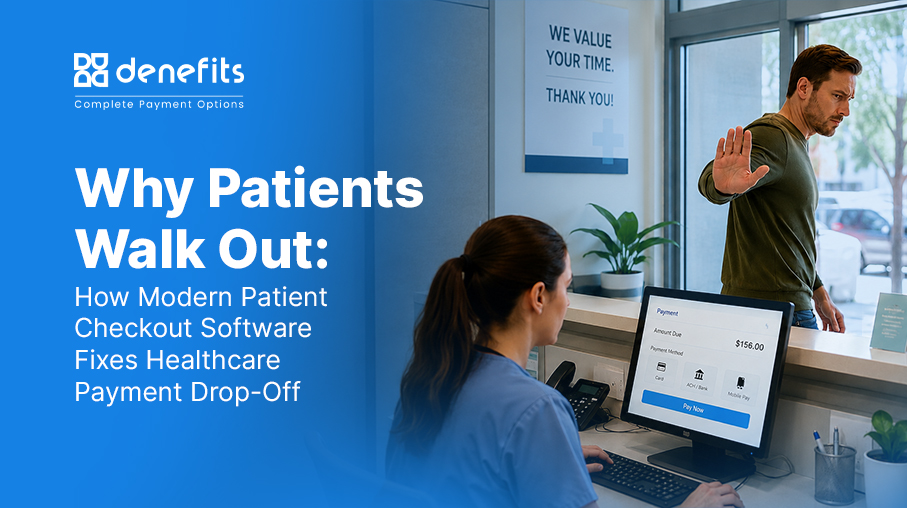
Imagine this: a patient agrees to treatment, books and completes the consultation, and proceeds to the checkout. Then, they’re handed a confusing invoice, told that they’ll need to call back about financing options, or asked to pay the full treatment amount upfront.
For healthcare practices, this scenario is more common and more expensive than they may realize. Patient payment drop-off happens because the payment experience creates uncertainty.
When the costs aren’t explained clearly, payment options aren’t available immediately, or the checkout process feels slow and impersonal, patients tend to delay their decision.
Today’s patients are accustomed to fast, transparent, and flexible checkouts. The Healthcare Financial Management Association (HFMA) Healthcare Dollars & Sense initiative emphasizes that patients increasingly expect financial experiences that match the convenience and transparency they receive in other industries.
When healthcare payment experiences fail to meet those expectations, practices risk losing revenue. The good news is that modern patient checkout software like Denefits is changing how practices collect payments by reducing friction at the most important points of patient interaction.
Why Healthcare Has a Checkout Problem and How To Reduce Healthcare Billing Friction
Over the last decade, clinical care has evolved dramatically. Appointment scheduling is increasingly digital, telehealth has become mainstream, and patient portals have made medical records easier to access. Yet, one part of the patient journey still has a huge scope for improvement: payment.
Many practices still rely on disconnected systems, manual processes, and follow-up collections that create unnecessary friction for both staff and patients. By the time patients reach the payment step, they’ve already invested time in consultations, diagnostics, or treatment planning. Unfortunately, the checkout becomes the first point of frustration.
The Patient Experience Has Changed
Healthcare consumers have developed new expectations. Now, they’re used to:
- Seeing costs before making a purchase
- Choosing from multiple payment methods
- Completing transactions in minutes
- Receiving digital confirmations instantly
- Continuing purchases across multiple devices
Healthcare isn’t exempt from these expectations. Patients expect the same level of convenience when paying for dental, medical, chiropractic, and specialty care.
Healthcare Still Relies on Old Payment Experiences
Many healthcare businesses have invested in electronic health records (EHRs), scheduling software, and medical billing software built for small practices. These systems are essential for managing clinical documentation and insurance claims, but they weren’t designed to optimize patient checkout experiences.
Practices often encounter challenges such as:
- Paper invoices handed to patients after appointments
- Manual explanations of payment options
- Insurance gaps that create unexpected balances
- Separate portals for billing and payments
- Delayed payment collections after treatment
- Multiple follow-up calls for unpaid balances
Each additional step increases the likelihood of delayed payments.
Why Payment Friction Leads to Patient Drop-off
Healthcare payment processing isn’t simply about collecting money, but about helping patients confidently complete the final step of their care journey. Payment friction usually occurs from confusing invoices, limited payment options, or long wait times at the front desk.
For healthcare practices, these obstacles can translate into:
- Lower treatment acceptance
- Increased accounts receivable
- More administrative burden
- Reduced cash flow
- Lost revenue opportunities
What Patients Need From Online Healthcare Payment Solutions
By the time a patient reaches checkout, they have already placed trust in your practice. They’ve discussed treatment options, shared personal information, and committed time to improving their health. The checkout experience should reinforce that confidence.
Transparent Costs Build Confidence
Unexpected medical bills cause patient dissatisfaction. Clear pricing has become an industry-wide priority. The Centers for Medicare & Medicaid Services (CMS) Hospital Price Transparency initiative requires hospitals to provide more accessible pricing information, reflecting the growing importance of helping patients understand healthcare costs before receiving care.
Patients appreciate knowing:
- What they owe today
- What insurance covers
- What balance remains
- Which payment options are available
- Whether payment plans exist
When pricing is explained clearly, patients are more likely to make informed decisions. Transparency also reduces awkward front desk conversations, creating better staff and patient experiences.
Flexibility Matters More Than Ever
Healthcare expenses can be unpredictable. Even insured patients face deductibles, co-pays, uncovered procedures, or elective treatments that require out-of-pocket payments.
Rather than handing a single invoice, medical practices are now offering their patients multiple ways to pay, so they can choose the one that fits their budget and situation.
Examples include:
- Paying the balance in full
- Splitting payments over time
- Financing larger procedures
- Paying digitally through secure links
- Completing payment later through personalized checkouts
Faster Checkout Improves the Entire Experience
Long checkout conversations frustrate everyone involved. Patients don’t want to spend fifteen minutes discussing payment logistics after completing their appointment. Likewise, your front desk staff shouldn’t have to manually explain every financing option, calculate payment plans, or print multiple forms for every patient.
Modern online payment solutions for healthcare simplify this process by presenting payment choices clearly and allowing patients to complete transactions digitally.
Patients Expect Digital Convenience
Healthcare increasingly competes with other digital experiences people encounter throughout the day.
Patients already receive appointment reminders through text messages, schedule visits online, and access medical records through secure portals. Naturally, they expect payments to be just as convenient.
Whether they’re completing payment through:
- SMS links
- Emails
- QR codes
- Mobile devices
- Patient portals
The experience should feel seamless from beginning to end.
Practices that continue to rely on outdated payment collection methods risk creating unnecessary delays in an otherwise modern payment journey.
Why Medical Billing Software Alone Isn’t Enough
Many healthcare organizations assume that upgrading their billing system will automatically solve payment challenges.
While medical billing software plays an essential role in managing claims, coding, insurance submissions, and financial records, it addresses a very different part of the revenue cycle than patient checkout.
Billing software is designed to document, calculate, and track payments after services are delivered. It isn’t built to optimize the moment when patients decide whether to proceed with payment. That distinction matters.
Billing Software vs. Checkout Infrastructure
Traditional billing platforms improve administrative efficiency by performing critical back-office functions, including submitting insurance claims, generating invoices, managing patient accounts, and producing financial reports.
However, checkout infrastructure serves a different purpose. Instead of managing financial records behind the scenes, it focuses on guiding patients through a clear, friction-free payment journey when they’re ready to pay.
When Traditional Payment Workflows Fall Short
Patient delays may begin before invoices become due. Patients may leave because:
- They don’t fully understand their financial responsibility.
- They’re presented with limited payment options.
- Staff members don’t have time to explain alternatives.
- They need time to discuss with their family members.
- They’re planning to return later.
In each of these situations, the issue isn’t inaccurate billing. It’s the absence of a checkout experience designed to support patient decision-making. As patient experiences continue to evolve, practices are recognizing that improving collections is about creating better payment journeys.
How Modern Patient Checkout Software Improves Healthcare Payment Processing
The traditional patient checkout process was designed only around collecting payments. Modern patient checkout software takes a fundamentally different approach. Instead of presenting a single invoice, it creates an interactive checkout experience that removes uncertainty and gives patients multiple ways to move forward.
The result is a smoother payment journey for patients and more predictable revenue for healthcare practices.
Multiple Payment Paths Instead of One Dead End
Every patient has a different financial situation. While some are comfortable paying the full amount, others may need financing or a structured payment plan to proceed with treatment.
Modern checkout builder platforms provide multiple payment pathways, allowing practices to present options that suit a wider range of patients.
Depending on their credit profile and the practice’s workflow, the patients may be able to:
- Pay the full balance in a single transaction
- Choose a monthly payment plan
- Explore financing options for larger procedures
- Complete payment later using a secure checkout link
Rather than forcing every patient into the same payment experience, practices can offer flexibility while keeping the checkout process simple and transparent.
Digital Checkout That Meets Patients Wherever They Are
Right from researching providers online and booking appointments from their phones to communicating through email or text messages, today’s patients prefer digital options for everything.
Modern healthcare payment processing platforms allow practices to deliver secure checkout experiences through multiple channels, including SMS payment links, email, QR codes displayed in the office, tablet or kiosk checkouts, patient portals, or practice websites.
Instead of asking patients to return to the office or call back later, practices can serve them on the channel they’re already using. This convenience makes payments feel like a natural continuation of the patient experience.
Less Administrative Work for Your Staff
Every minute spent explaining invoices, calculating payment plans, and following up on unpaid balances is time that could be spent serving patients.
The front desk team often ends up becoming the unofficial payment department, juggling administrative work alongside scheduling, insurance verification, phone calls, and patient check-ins. Modern checkout technology automates most of this process.
A personalized checkout experience that clearly presents all available choices helps reduce repetitive administrative tasks while creating greater consistency across every patient interaction.
Improving the Clinic Checkout Experience Throughout the Patient Journey
One of the biggest misconceptions about checkout is that it happens only at the reception desk. In reality, payment decisions occur throughout the patient journey. Modern checkout infrastructure supports patients at every stage, not just after the treatment is complete.
➧ Before the Appointment
The cost of the treatment is a major concern for patients even before they walk through the door. Providing digital payment estimates, financing information, or secure payment links before the appointment helps reduce uncertainty and prepares patients for making informed financial decisions.
➧ During Check-In
The waiting room presents another opportunity to simplify the checkout workflow. Practices can provide:
- QR codes linking to secure checkout pages
- Digital payment forms
- Mobile-friendly payment options
- Financing information before treatment begins
Instead of overwhelming patients after the appointment, practices can begin the payment conversation earlier.
➧ During Treatment Decisions
Treatment acceptance depends a lot on affordability. When providers recommend procedures, patients naturally start considering the financial commitment.
Providing quick access to payment options during treatment discussions helps eliminate delays caused by uncertainty. Rather than asking patients to “call back later,” practices can help them evaluate payment options while they’re still in conversation.
➧ At Checkout
The front desk should confirm, not create the patient’s payment decision. Instead of lengthy discussions about invoices or financing, checkout becomes a straightforward confirmation of the option the patient has already selected. This shortens wait times and reduces stress for both staff and patients.
➧ After the Visit
Payment opportunities don’t end when patients leave the office. Secure payment links delivered via SMS, email, or other communication channels allow patients to complete the transaction later if needed, reducing missed collections and the need for repeated follow-ups.
How To Set Up Patient Checkout Software in Under a Day
Many practice owners assume that setting up new payment technology requires weeks of training, expensive consultants, or complex IT projects. But modern checkout platforms, such as Denefits, are designed very differently. Instead of replacing existing systems, they work alongside the current practice management and billing workflows.
➮ No Technical Expertise Required
Such checkout platforms can be configured through intuitive interfaces that don’t require coding or technical expertise. Practice managers can build customized payment experiences using visual tools, without relying on software developers.
➮ Works Alongside Existing Systems
Rather than replacing billing platforms, EHRs, or practice management software, modern checkout solutions complement them. This allows practices to improve patient checkout experience without disrupting established clinical workflows.
➮ Launch Faster Than You Think
Modern payment infrastructure can be implemented in minutes, not weeks. Practices can begin creating branded checkout experiences, generating payment links, and offering flexible payment options almost immediately.
Signs Your Practice Needs Better Checkout Infrastructure
Contrary to the assumption, payment problems don’t always stem from patient affordability or insurance challenges. Often, the real issue lies in the checkout experience itself.
Your practice may benefit from modern patient checkout software if you regularly experience situations like these:
- Patients often say they wish to “pay later.”
- Staff spend hours making payment reminder calls.
- Treatment plans are accepted but not always scheduled.
- Patients ask whether payment plans are available after receiving the invoice.
- Front-desk teams manually explain payment options throughout the day.
- Outstanding balances continue to accrue despite consistent patient volume.
- Patient collection relies heavily on mailed statements or paper invoices.
These challenges may seem minor individually, but together, they create unnecessary friction that affects practice revenue and patient satisfaction.
How To Reduce Patient Payment Drop-off With Denefits
Patients rarely walk away because they don’t value their health, but because the payment experience creates uncertainty. Modern patient checkout software helps healthcare practices replace disconnected payment systems with flexible, streamlined checkout experiences that meet the patient’s expectations.
Platforms like Denefits are redefining what healthcare checkout looks like by helping practices build personalized experiences. Rather than forcing every patient through the same payment process, practices can offer multiple payment pathways, deliver checkouts through SMS, email, QR codes, or secure links, and create a more secure path from treatment recommendation to completed payment.
Practices can get started in as little as 11 minutes. Businesses using Denefits have reported up to a 38% increase in checkout completion, helping more customers complete payment.
The result is more than faster collections. It’s a better patient experience, reduced administrative burden, and fewer patients giving up on their health. If your practice is still relying on yesterday’s checkout process, it may be time to rethink the final, and often the most important step of the patient journey.
Ready to Simplify Patient Payments?
Schedule a demo with Denefits and discover how an effortless checkout experience can improve collections, reduce administrative work, and increase patient satisfaction.
Schedule a Demo With Denefits →Frequently Asked Questions
1. What Is Patient Checkout Software?
Patient checkout software is a digital solution that helps healthcare providers create a faster, more flexible payment experience. It allows practices to present payment options, collect payments through multiple channels, and reduce friction from the checkout process.
2. How Is Patient Checkout Software Different From Medical Billing Software?
While medical billing software focuses on insurance claims, coding, invoicing, and financial recordkeeping, patient checkout software aims to improve the payment experience at the point of care by helping patients complete payments more easily and comfortably.
3. Can Patient Checkout Software Work With Existing Practice Management Systems?
Yes. Platforms like Denefits are designed to complement existing EHRs, billing software, and practice management systems rather than replace them.
4. Is Patient Checkout Software Suitable for Small Medical Practices?
Yes. Small practices often benefit the most because automation reduces manual administrative work while improving payment collection without requiring additional staff.
5. Can Dental and Chiropractic Practices Benefit From Patient Checkout Software?
Yes. Dental and chiropractic practices frequently manage elective treatments, recurring visits, and out-of-pocket expenses. Modern checkout solutions help present payment options more clearly, making it easier to proceed with recommended care.
6. What Is the Best Payment Software for Medical Practices?
The best payment software for medical practices is the one that simplifies the patient checkout experience while integrating seamlessly with existing workflows. Look for a solution that offers flexible payment options, secure digital checkout, and an intuitive experience for both patients and staff. Denefits is an example of such software that helps practices modernize checkout by making payments easier and more convenient.