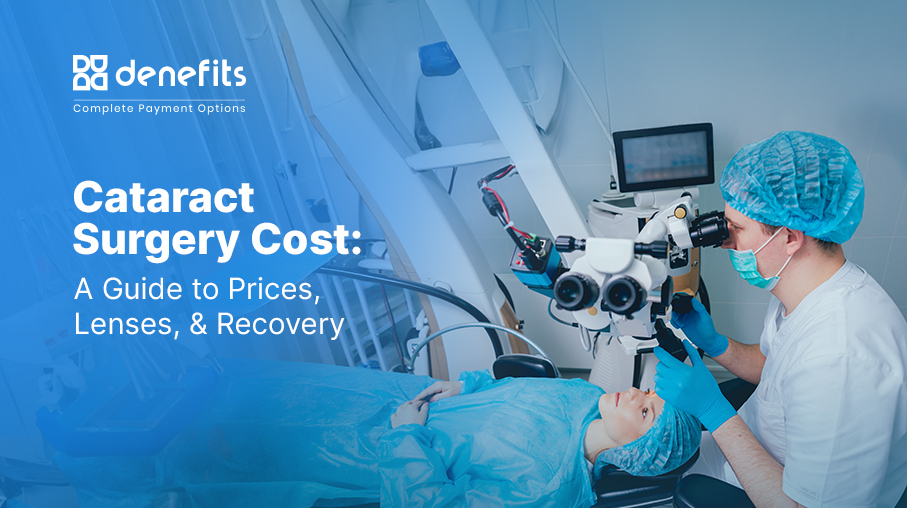
Cataract surgery cost is often the first thing people think about. But it is not the only thing that matters. Cataracts develop slowly. So do the questions around surgery. At first, vision changes feel small. Over time, daily tasks become harder. And that’s when doubts start to appear.
Many people are unsure about what cataract surgery really involves. Some worry about the procedure itself. Others think about recovery, lenses, or timing. The information is available. But it often feels scattered and hard to understand.
This blog brings everything together in one place. It explains cataract surgery in a simple way. Step by step. So you can understand the process, the choices, and the costs.
What Cataract Surgery Really Is
Cataract surgery is a simple outpatient eye procedure. It removes the cloudy natural lens from your eye. That lens is then replaced with a clear artificial one, called an IOL.
The surgery is the only proven way to treat cataracts. The procedure usually takes less than an hour. It is done using local anesthesia. Also, it is very safe. Most people notice clearer vision afterward.
When Does Surgery Become Vital
If vision problems affect your daily life, then you should go for it.
Cataracts don’t appear overnight. They develop slowly. At first, the change feels small. But then reading becomes difficult. Driving feels unsafe. Watching television is no longer comfortable.
Sometimes, cataracts are not the main issue. Your doctor might suggest it, as removing the cataract allows them to clearly see the back of your eye. This helps monitor conditions like diabetic retinopathy or macular degeneration.
There is usually no rush. Cataract surgery is rarely an emergency.
Your doctor will help you decide the right time. They will explain the benefits and risks.
If you have cataracts in both eyes, then surgery is done one eye at a time. The second eye is usually treated about a month later.
Different Ways Cataract Surgery Is Done
Cataract surgery can be performed in more than one way. The method depends on how advanced the cataract is.
✦ Phacoemulsification (Phaco) – The Most Common Approach
This is the method used in most cataract surgeries today. Ultrasound waves break the cloudy lens into small pieces. These pieces are then gently removed. A clear artificial lens is placed inside the eye. This approach allows for a small incision and faster recovery.
✦ Extracapsular Surgery – Used for Advanced Cataracts
This method is used when the cataract is more developed. The cloudy lens is removed in one piece. It requires a slightly larger incision. After removal, an artificial lens is placed in the eye.
✦ Laser Cataract Surgery – A More Precise Technique
This technique uses a laser instead of traditional blades.
The laser makes precise cuts and softens the cataract. This can make the procedure more controlled.
Why does this matter? In some cases, it may support smoother removal and quicker healing.
The Entire Surgical Process
Preparation is simple. Your eye doctor will guide you step by step.
➲ Before the Surgery
You will visit your eye doctor about a week before surgery. Your eye is measured to select the correct artificial lens.
You may be given special eye drops. These help prevent possibilities of infections.
Make sure you tell the doctor about your current medications. You may need to stop using them temporarily.
The doctor might tell you not to eat or drink before surgery.
Quick Tip:
Bring someone with you. You won’t be able to drive after the procedure, and having someone accompany you ensures a safer trip home.
➲ During the Procedure
- The cloudy lens is removed. And a clear artificial lens is placed in its position.
- The procedure usually lasts about one hour. You stay awake but relaxed.
- You may notice light or movement. But you will not see the surgery itself.
- Numbing eye drops are used, so pain is minimal.
- Small tools are used to safely remove the lens.
- Before you leave, your eye is checked.
➲ Your Post Surgery Recovery
Your doctor will explain how to care for your eye.
You will be given eye drops to support healing. And you may need to wear an eye shield or glasses.
You can’t rub your eye or lift heavy objects. Also, mild itching or light sensitivity is common. This usually improves within a day or two.
Most people fully heal within 8 weeks.
A Quick Note:
Call your doctor if you notice anything unusual. Strong pain. Redness. Vision loss. Or many new floaters.
Cataract Lens Price List
Cataract lens prices are not the same for everyone. Some lenses are basic and covered by insurance. Others offer more visual freedom but come with additional cost.
| Lens Type | Cost (Per Eye) | Insurance Coverage | Vision Impact |
| Standard Monofocal IOL | A few hundred dollars | Usually covered | Clear distance vision. Reading glasses are often needed. |
| Multifocal IOL | $2,000 – $4,000 | Not covered | Helps with distance and near vision. Reduces need for glasses. |
| Accommodating IOL | $3,000 – $5,000 | Not covered | More natural focus across distances. Fewer glasses needed. |
| Toric IOL | Varies by lens type | Basic versions may be covered | Corrects astigmatism. Vision benefit depends on the lens chosen. |
| Light Adjustable Lens (LAL) | Around $4,300 | Not covered | Custom vision adjusted after surgery. Most personalized option. |
Note: Premium lenses increase the overall cost of surgery. Your vision needs, lifestyle, and budget impact the choice.
Cataract Surgery Cost in All States (USA)
The cost of surgery can vary significantly across the United States.
| State | Price Range ($) | State | Price Range ($) |
| Alabama | 3,962 – 5,086 | Montana | 4,349 – 5,839 |
| Alaska | 5,379 – 7,277 | Nebraska | 3,962 – 5,335 |
| Arizona | 4,373 – 6,089 | Nevada | 4,368 – 5,942 |
| Arkansas | 3,834 – 5,207 | New Hampshire | 4,746 – 6,331 |
| California | 5,445 – 7,439 | New Jersey | 4,708 – 6,287 |
| Colorado | 4,444 – 5,993 | New Mexico | 4,066 – 5,443 |
| Connecticut | 4,769 – 6,191 | New York | 4,751 – 6,351 |
| Delaware | 4,396 – 5,954 | North Carolina | 4,127 – 5,552 |
| Florida | 4,389 – 6,010 | North Dakota | 4,038 – 5,463 |
| Georgia | 3,901 – 5,348 | Ohio | 4,056 – 5,654 |
| Hawaii | 6,399 – 9,028 | Oklahoma | 3,834 – 5,201 |
| Idaho | 4,496 – 6,050 | Oregon | 4,699 – 6,421 |
| Illinois | 4,477 – 6,248 | Pennsylvania | 4,293 – 5,878 |
| Indiana | 3,915 – 5,450 | Rhode Island | 4,699 – 6,172 |
| Iowa | 3,806 – 5,296 | South Carolina | 4,075 – 5,629 |
| Kansas | 3,868 – 5,335 | South Dakota | 4,038 – 5,226 |
| Kentucky | 4,108 – 5,526 | Tennessee | 3,957 – 5,399 |
| Louisiana | 4,094 – 5,603 | Texas | 4,088 – 5,490 |
| Maine | 4,354 – 5,705 | Utah | 4,278 – 6,140 |
| Maryland | 5,039 – 6,830 | Vermont | 4,599 – 6,255 |
| Massachusetts | 5,100 – 7,386 | Virginia | 4,283 – 5,808 |
| Michigan | 4,089 – 5,411 | Washington | 4,949 – 6,664 |
| Minnesota | 4,184 – 5,622 | West Virginia | 3,905 – 5,463 |
| Mississippi | 3,679 – 5,156 | Wisconsin | 4,141 – 5,584 |
| Missouri | 3,901 – 5,207 | Wyoming | 4,104 – 5,635 |
Note: Prices shown are estimated state averages. Actual pricing depends on lens selection, provider, facility fees, and location within the state. Your insurance cover and medical needs are also deciding factors.
Cost of Cataract Surgery: It’s Not The Same for All
Many factors work together to decide the final cost. Knowing them helps you plan better. And avoid surprises later.
➮ How Complex Your Case Is
The severity of your cataracts affect cost the most. More advanced cataracts often need extra care during surgery.
If you have other eye problems, surgery can become more complicated. This may increase the time, effort, and overall cost of treatment.
During your first visit, your doctor checks your eye health carefully. Based on this, you get a treatment plan made just for you.
This plan focuses on safety, comfort, and better vision after surgery.
➮ Your Surgeon’s Experience Matters
Your surgeon’s experience plays a big role in the surgery results. Skilled surgeons handle challenges more confidently during procedures.
They have performed many surgeries and know what works best. This experience helps lower risks and improve visual outcomes.
Choosing a trusted eye center gives you peace of mind.
➮ Tech Used for Surgery
Modern surgeries are done using advanced tools. These tools help improve accuracy and patient comfort.
Laser systems and digital mapping guide the surgeon step by step. This helps achieve better results and faster recovery.
Advanced technology also increases overall treatment costs. Your surgeon explains each option and its cost impact clearly.
➮ The Type of Lens and Coverage Details
Standard lenses restore clear vision. And are usually insurance covered. But premium lenses reduce the need for glasses. These lenses often cost more.
In most cases, they are not fully covered. You might have to pay out of your pocket.
➮ Other Costs to Look After
You may also pay for consultations, medicines, and follow-up visits.
These steps are vital. They help ensure your recovery goes smoothly.
Do ask for a full cost breakdown before surgery. This helps you prepare better and avoid surprise costs.
Manage Cataract Surgery Cost With Denefits
Cataract surgery is often delayed because of cost. Not because patients don’t need it. But because paying everything at once feels difficult.
Many patients wait. Vision keeps getting worse. Daily tasks become harder. This is where payment flexibility matters.
Denefits helps practices offer simple flexible payment plans for cataract surgery. The total cost is broken into smaller amounts. And payments feel more manageable.
There are no credit checks. That means almost every patient can qualify without stress or confusion.
With high approval rates, more consultations turn into scheduled surgeries. Patients don’t have to delay care. They can proceed when surgery is actually needed.
Practices still receive secure payments. Even if a patient misses an installment. This reduces financial risk and lowers pressure on your team.
When cost is no longer a barrier, patients move forward sooner. They complete treatment. They trust the process. And they feel supported at every step.
The End Note
Cataract surgery is not rushed. It is planned. From choosing the right time to selecting the right lens, every step matters. Cost is part of that decision too. When payments are manageable, patients don’t have to delay care.
Denefits helps make that possible by turning high one-time costs into simple monthly payments. So surgery happens when vision needs it, not when finances allow.
FAQs
1. What Is My Out-Of-Pocket Cost for Cataract Surgery With Insurance?
Your cost depends on deductibles, copays, and plan coverage limits. Choosing premium lenses can increase what you pay.
2. How Much Is Cataract Surgery Typically?
Prices vary based on location, surgeon, and lens selection. You’ll usually see costs in the several-thousand-dollar range.
3. How Much Does Cataract Surgery Cost From Start to Finish?
The total includes surgeon fees, facility charges, and the lens. Insurance may lower costs for standard treatment.
4. What Is the Average Cost of Cataract Surgery With Medicare?
Medicare covers basic surgery and a standard lens. You pay extra for premium upgrades and remaining deductibles.
5. What Factors Affect Vitrectomy Surgery Cost?
Costs depend on surgical complexity and underlying eye conditions. Insurance often covers it when medically necessary.
6. What Does Cataract Surgery in Upland, CA Usually Cost?
Local clinic pricing and surgeon experience influence costs. Your final amount depends on the lens you choose.
7. How Much Does Eye Surgery Cost for Common Procedures?
Costs vary widely depending on the type of eye surgery. Your insurance coverage determines how much you pay.
8. What Is the Average Cost of Cataract Surgery Nationwide?
National averages fall within a broad price range. Regional healthcare costs affect what you’re charged.
9. Does Insurance Cover Cataract Surgery When Vision Is Affected?
Most plans cover surgery if cataracts impact daily activities. You may still pay for premium lens options.
10. What Is the Cost of Cataract Surgery in Huntington Beach?
Pricing varies between surgical centers and providers. Advanced technology can increase total cost.
11. What Influences Lens Replacement Surgery Cost?
Lens type and surgical technology drive pricing differences. Insurance usually covers only standard lenses.
12. Why Is Laser Cataract Surgery Cost Higher Than Traditional Surgery?
Laser systems add precision and advanced surgical planning. Those benefits increase overall procedure costs.
13. Is Laser Cataract Surgery Worth the Cost for Long-Term Vision?
It may be worth it if precision and customization matter. Your vision goals and budget guide the decision.
14. What Does Eye Lens Replacement Surgery Cost Usually Include?
Costs include the lens, surgeon, and facility fees. Insurance often covers basic lens options.
15. Why Does a CPT Code for Cataract Surgery Appear on Bills?
CPT codes identify procedures for billing and insurance. They help process claims accurately.
16. What Increases the Cost of Cataract Surgery With Astigmatism?
Astigmatism correction often requires toric lenses. Those lenses usually add to the total cost.
17. How Much Is Cataract Surgery Without Insurance Coverage?
Without insurance, you pay full surgical and facility fees. Costs depend on location and lens choice.