
Taking care of your oral health is essential for your overall well-being. Poor oral hygiene can lead to infections, and in some cases, these infections may be linked to conditions like heart disease, diabetes, and stroke. A gum abscess is one such infection, formed as a pocket of pus due to bacteria, often caused by tooth decay, gum problems, or past trauma. It is usually a painful experience when a gum abscess pops.
So, what causes it, how can you avoid it, and what steps should you take if it gets worse?
Surprisingly, each year, dental abscesses affect nearly 200,000 Americans.
What is a Gum Abscess?
A gum abscess is a painful infection in the gums that creates a pus-filled pocket or a gum boil in the mouth. It usually happens due to untreated tooth decay, gum disease, or injury. When it bursts, pus may drain out, giving temporary pain relief and causing a bad taste or slight bleeding. Even though it may feel better, the infection still stays active. Eventually, it can spread to other parts of the mouth or body, which can turn into an emergency.
Why Does a Gum Abscess Pop?
If a gum abscess pops by itself, it must be due to the pressure from the accumulating pus. When it becomes high, the gum abscess pops.
1. Pressure Build-Up from Pus
When bacteria infect the gums, the body sends white blood cells to fight them. In this process, dead bacteria, dead white blood cells, and tissue waste build up and form pus. This pus collects in the gum, and pressure increases. As a result, the tissue breaks open, and the abscess pops, releasing the pus.
2. Weakening of Gum Tissue
The infection causes swelling and damage in the tissue around the abscess. The inflamed area becomes thin and weak, and a soft yellow or white spot may form on the surface. Over time, the tissue can break open, allowing the pus to drain out. This is similar to how a pimple bursts when pressure builds under the skin.

Curious About Full Mouth Dental Implants?
Discover the cost, procedure, and what to expect
3. Natural Drainage by the Body
Sometimes the body tries to relieve the infection naturally. When the abscess pops:
- Pus drains into the mouth
- Pressure and pain may temporarily reduce
- You may notice a bad taste or smell
However, this does not mean the infection is gone. The source of bacteria may still remain.
4. External Pressure or Irritation
A gum abscess can also be caused by some activities that put pressure on the gum. For instance:
- Chewing food
- Brushing or flossing
- Touching the swollen area or
- Accidentally biting the swollen gum
5. Infection Creating a Drainage Channel
In some cases, the infection forms a small tunnel (sinus tract) from the abscess to the surface of the gum. This allows pus to escape repeatedly.
When this happens:
- The abscess may drain again and again
- Pain might come and go
- The infection may persist underneath
Gum Abscess Home Treatment
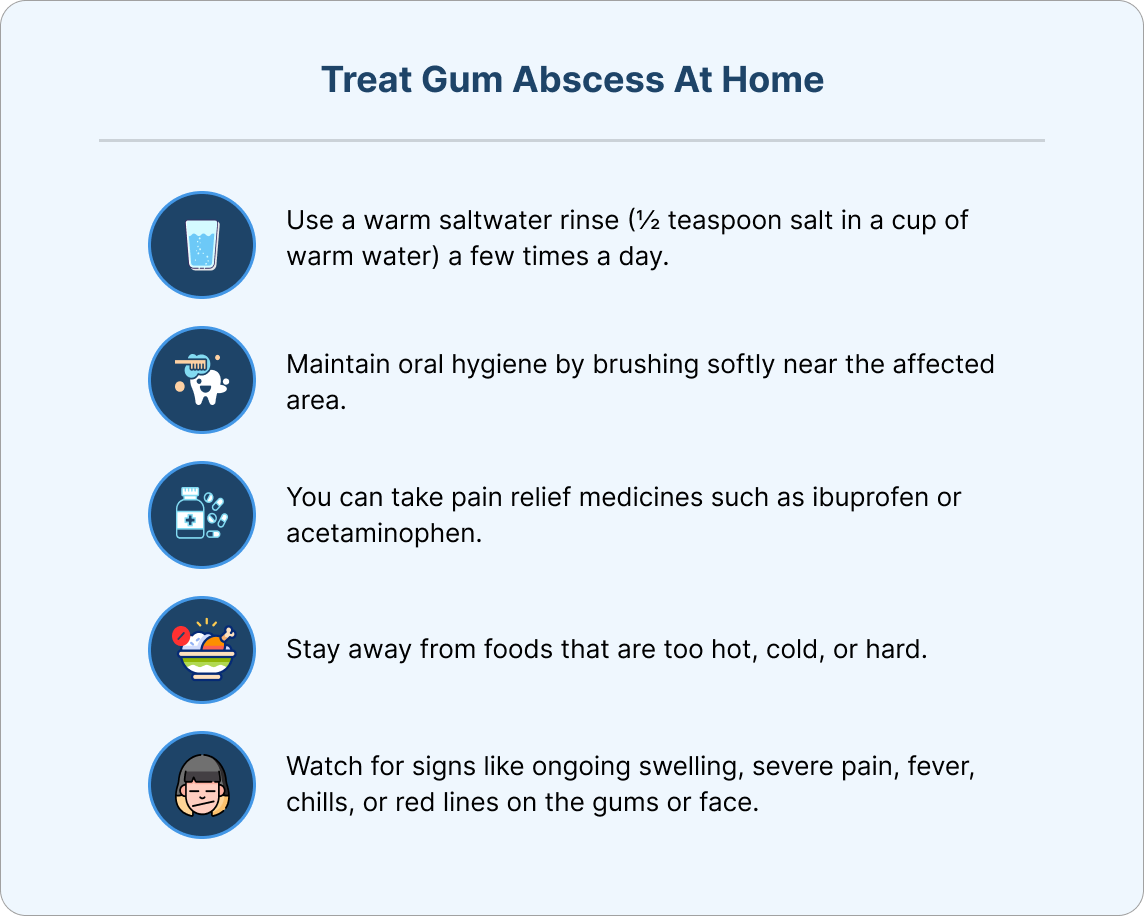
Abscess popping doesn’t mean pain is gone. In fact, proper care is crucial to prevent the infection from returning or spreading. Moreover, if you are searching for ‘how to pop a gum abscess at home’? You should probably avoid it.
Here’s what you should do instead:
When Should You See a Dentist for a Gum Abscess?
1. Diagnose the Type of Abscess
A dentist identifies whether it is a gum abscess (periodontal) or a tooth abscess (periapical). It is done to ensure the right and effective treatment.
2. Drain the Abscess Safely
Professional drainage removes pus completely. Moreover, it reduces pressure and pain and prevents the infection from spreading to nearby tissues.
3. Treat the Source of Infection
- If caused by gum disease: The dentist performs scaling and root planing to remove plaque and tartar.
- If caused by cavities or trauma: It may require treatments like fillings, root canal, or extraction.
4. Prescribe Antibiotics (If Needed)
Antibiotics are given if the infection is severe or spreading. Therefore, it helps prevent systemic infection, as over-the-counter remedies alone cannot fully eliminate the bacteria.
Can a Gum Abscess Lead to Serious Health Issues?
1. Spread of Infection
The bacteria from a gum abscess can spread beyond the gums to nearby areas. It may affect the jawbone and facial tissues, and in some cases, reach the sinuses, causing pain, pressure, or a blocked nose. In rare but serious situations, the infection can enter the bloodstream and lead to sepsis, which needs urgent medical care.
2. Tooth Loss
Persistent infection damages the gum tissue and bone that support the tooth, weakening the tooth’s stability. Over time, the tooth may become loose and, if untreated, may need to be extracted. This not only affects chewing but can also impact jaw alignment and overall oral health.
3. Chronic or Recurrent Abscesses
If the main cause, like gum disease, trapped food, or cavities, is not treated, the abscess can keep coming back. This can cause constant pain, swelling, and discomfort, making it hard to eat or speak. Moreover, repeated infections can lead to long-term damage to the gums and tissues.
4. Gum Recession and Bone Damage
A long-lasting infection can cause gum recession, which exposes the tooth roots. It may also harm the supporting bone, making teeth less stable and future dental treatments more difficult. This kind of damage may not be reversible if ignored for too long.
5. Sinus and Ear Complications
Abscesses in the upper jaw can sometimes spread to the sinuses, causing infections with symptoms like facial pressure, a blocked nose, and pain. In rare cases, the infection may also spread to the ear or neck, leading to more discomfort and complications.
6. Systemic Health Issues
Dental infections can impact your overall health. If a gum abscess is not treated, it may make health conditions severe.
The Final Note
A gum abscess popping is a warning sign rather than a solution. It may ease discomfort for a short time, but the underlying infection still needs professional attention. Therefore, prompt treatment can prevent infection spread, tooth loss, or long-term damage. Moreover, taking early action and maintaining good oral care habits are key to avoiding serious dental problems.
That said, in a survey, 92% of respondents indicated they may put off general dental treatments due to cost. Fortunately, many dental clinics provide flexible financing solutions to ease the burden. These options make it easier to access necessary treatments without paying the full amount upfront. With the right financial support, you don’t have to delay care, helping you take control of your oral health without added financial pressure.
FAQs
1. Can Popping a Gum Abscess Kill You?
It’s very rare. But if the infection spreads to the bloodstream (sepsis), it can become life-threatening without treatment.
2. What Happens When a Gum Abscess Pops by Itself?
A self-popped abscess drains pus and reduces pain, but it does not cure the underlying issue.
3. What Happens to the Gum Boil After Tooth Extraction?
It can be a sign of healing issues or infection, so professional evaluation is important.
4. What To Do if a Dental Abscess Bursts on Its Own?
Even if pain reduces, seek dental care to treat the infection and prevent it from returning.
5. What is a Wisdom Tooth Abscess Gum?
A wisdom tooth abscess happens due to trapped bacteria and often needs cleaning or removal.