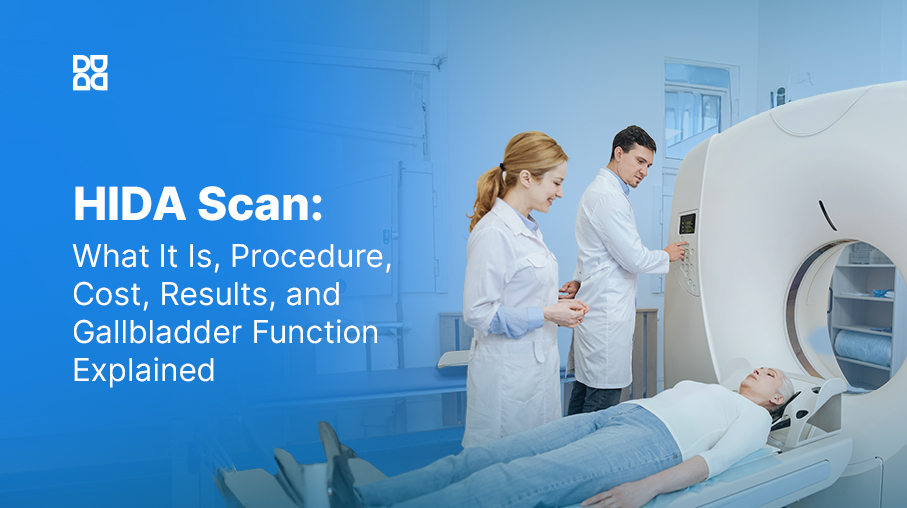
A HIDA scan is a nuclear medicine imaging test used to evaluate the function of the liver, gallbladder, and bile ducts. Doctors commonly order this test when a person has unexplained upper abdominal pain, nausea, or symptoms that suggest a gallbladder or bile flow problem. During the scan, a small amount of radioactive tracer is used to track the movement of bile through the digestive system, helping doctors identify functional issues that may not be apparent on ultrasound or CT scans.
In this guide, you will learn what HIDA scan is, why doctors recommend it, and what medical conditions it can help detect. We will also explain what happens during the test, how long it typically takes, how results are interpreted, and what patients should expect before and after the scan, all explained in clear, simple language based on trusted medical sources.
What is a HIDA Scan (HIDA Test Overview)
A HIDA scan gets its name from the radioactive tracer used during the test. HIDA stands for hepatobiliary iminodiacetic acid, a substance that acts like bile once it enters the body. After the tracer is injected into the veins, the liver absorbs it and releases itinto the bile ducts. From there, it moves into the gallbladder and the small intestine, allowing doctors to watch how bile flows through the system in real time.
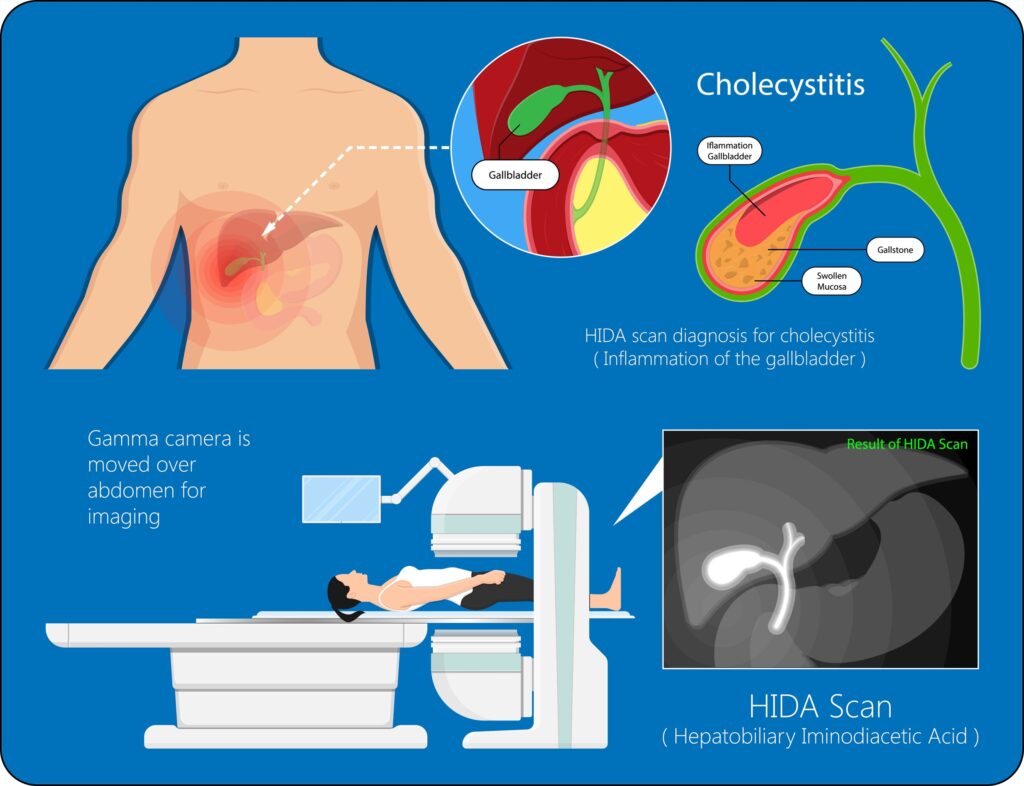
Doctors recommend this scan when symptoms point to a gallbladder or bile flow problem, but other imaging tests do not give clear results. It is often used for ongoing upper abdominal pain, nausea related to eating, or suspected gallbladder dysfunction. Because these tests evaluate how well the organs function, not just how they look, it helps doctors detect issues that structural scans may miss.
Hepatobiliary Scan Explained (NM Hepatobiliary Imaging)
A hepatobiliary scan is another name for an HIDA scan and refers to the organs involved in the test. The term hepatobilary combines hepatic ( liver) and biliary ( gallbladder and bile ducts ) . This scan is used to evaluate the small intestine. By focusing on this pathway, doctors can identify problems with bile flow or gallbladder function that may be causing symptoms.
NM hepatobiliary imaging uses nuclear medicine technology to show how these organs work in real time. A small amount of radioactive tracer is injected into the veins, and a special camera detects the radiation as the tracer moves through the body. The radiation exposure is low and carefully controlled, and the tracer naturally leaves the body over time. This approach allows doctors to see functional issues such as slow bile movement or blockages that may not appear on standard imaging tests.
HIDA Scan Procedure: What to Expect Step by Step
The HIDA scan procedure is usually done in a hospital or imaging center and follows a clear, structured process. Knowing what happens before, during, and after the scan helps reduce anxiety and make the experience easier.
➮ Before the Scan
Before your appointment, your doctor may ask you to avoid eating or drinking for 4-6 hours. This helps ensure accurate results because food can affect how the gallbladder empties. You should tell your healthcare provider about any medications you take, especially pain medicines, since some drugs can slow bile flow. In most cases, you can continue taking regular medications unless your doctor says otherwise.
When you arrive, you will change into a hospital gown and remove any metal items, such as jewelry, that could interfere with imaging.
➮ During the Scan
The scan begins with a small injection of a radioactive tracer into the veins in your arms. This tracer travels to your liver and moves through your bile ducts, gallbladder, and small intestine. You will lie flat on an imaging table while a special camera takes pictures as the tracer moves through your system.
You will need to stay still during imaging, but the test itself is painless. In some cases, amedicaiton may be given to stimulate the gallbladder so doctors can measure how well it empties. This part may cause mild camping or nausea, but it usually passes quickly.
➮ After the Scan
Once imaging is complete, you can usually return to normal activities right away. Drinking fluids helps flush the tracer out of your body. Most people do not experience side effects, and the radiation exposure is low. Your images will be reviewed by a specialist, and your doctor will discuss the results with you, usually within a few days.
Overall, the HIDA scan is a safe and well-tolerated test that provides valuable information about how your gallbladder and bile system are functioning.
What Does a HIDA Scan Show About Your Gallbladder and Bile Flow?
A HIDA scan shows how bile is produced by the liver, stored in the gallbladder, and released into the small intestine. After the radioactive tracer is injected, the scan tracks its movement step by step. This allows the doctor to see whether bile flows smoothly through the bile ducts and whether the gallbladder fills and empties as it should.
The doctor closely analyzes the timing and pattern of bile movement. They look at how quickly the liver absorbs the tracerm whether the gallbladder fills within the expected time, and if bile reaches the small intestine normally. Delays, incomplete filling, or improper emptying can indicate problems such as gallbladder inflammation, bile duct blockage, or functional gallbladder disorders. Because this text measures function rather than structure, it can reveal issues that may not appear on ultrasound, CT, OR MRI scans.
HIDA Scan Gallbladder Function and What Doctors Evaluate
A HIDA scan gallbladder assessment is used to measure how well the gallbladder stores bile and releases it when needed for digestion. Unlike imaging tests that only show the shape of the gallbladder, this scan evaluates how the gallbladder functions over time, which is critical for diagnosing many gallbladder-related symptoms.
♦ How the Gallbladder Emptying Process Works
After bile is produced by the liver, it travels to the gallbladder, where it is stored between meals. During a HIDA scan, doctors observe how the tracer enters the gallbladder and remains there until the gallbladder is stimulated to contract. This stimulation is often done using a medication that mimics a natural digestive hormone, promoting the gallbladder to release bile into the small intestine.
By tracking this process, doctors can see whether the gallbladder empties bile efficiently and at the expected rate.
♦ What Functional Problems the Scan Can Detect
Doctors evaluate several functional signs during the scan, including delayed filling, reduced emptying, or no response to stimulation. These patterns may indicate gallbladder dysfunction, such as biliary dyskinesia or chronic gallbladder inflammation, even when gallstones are not present. Poor gallbladder performance can explain ongoing symptoms like abdominal pain, bloating, or nausea after eating.
Because the HIDA scan measures real-time gallbladder activity, it provides valuable information that helps doctors determine whether symptoms are linked to gallbladder function and guides decisions about further treatment or management
Gallbladder Ejection Fraction: What It Means and Why It Matters
The gallbladder ejection fraction is a key measurement doctors look at during a HIDA scan to understand how well your gallbladder is working. It shows the percentage of bile the gallbladder releases when it is stimulated to contract. In simple terms, it tells doctors whether your gallbladder is emptying properly or not.
During the test, a medication is given to make the gallbladder squeeze, similar to what happens after you eat a fatty meal. The scan then measures how much bile leaves the gallbladder over a specific period of time.
Normal vs Abnormal Gallbladder Ejection Fraction Values
- Normal range: Usually 35% to 75% (ranges may vary slightly by lab or protocol)
- Low ejection fraction: Below 35%, suggesting poor gallbladder emptying
- High ejection fraction: Above the upper limit, which may also be associated with symptoms in some patients
A low gallbladder ejection fraction often points to a functional gallbladder disorder, meaning the gallbladder looks normal on imaging but does not work as it should.
Why Gallbladder Ejection Fraction Is Clinically Important
This measurement helps doctors:
- Identify gallbladder problems when ultrasound results are normal
- Explain ongoing symptoms such as right upper abdominal pain, nausea, or bloating.
- Decide whether symptoms arelikely related to gallbladder function.
- Guide treatment decisions, including whether surgery should be considered.
Because it measures function rather than structure, the gallbladder ejection fraction provides information that other imaging tests cannot.
Abnormal HIDA Scan Results: Gallbladder Not Emptying
An abnormal hida scan gallbladder not emptying, results means gallbladder is not releasing bile into the small intestine as it should. This finding suggests a functional problem, not necessarily a blockage or gallstones. The tracer enters the gallbladder normally but stays there too long or empties very slowly after stimulation.
This result is important because it helps explain ongoing symptoms such as upper right abdominal pain, nausea after meals, bloating, or discomfort after eating fatty foods, even when other imaging tests appear normal.
What This Results Indicate
When the gallbladder does not empty properly on a HIDA scan, doctors may suspect:
- Gallbladder dyskinesis, where the gallbladder muscles do not contract effectively
- Chronic gallbladder inflammation, which can affect normal bile release
- Functional gallbladder disorder, meaning symptoms are present without visible stones.
In most cases, the abnormal result may be influenced by recent meals, certain medications, or improper preparation before the scan.
How Long Does a HIDA Scan Take From Start to Finish?
Many patients ask how long does a HIDA scan take so they can plan their day and know what to expect. In most cases, the entire HIDA scan process lasts about 1 to 2 hours, but some scans may take longer depending on how the gallbladder and bile ducts function during the tests.
The scan begins with the injection of a small amount of radioactive tracer, followed by a series of images taken over time. These images track how the tracer moves through the liver, gallbladder, bile ducts, and small intestine.
Typical HIDA Scan Duration
- Standard scan: Around 60 to 90 minutes
- With gallbladder stimulation (CCK): Up to 2 hours
- Delayed imaging: Occasionally, 3 to 4 hours if bile flow is slow
Most patients can remain still but comfortable during the imaging process, and there is usually no need for recovery time afterward.
Why Timing Can Vary
The length of a HIDA scan can vary due to:
- How quickly the liver processes and releases bile
- Whether the gallbladder fills and empties normally
- The need for additional images if the results are unclear
- Differences in testing protocols between medical facilities
Even if the scan takes longer than expected, this does not automatically mean something is wrong. Extra imaging simply allows doctors to collect accurate and complete information about gallbladder function.
HIDA Scan Cost: What Patients Should Expect
The HIDA scan cost can vary depending on where the test is performed, your insurance coverage, and whether additional medications or imaging are required during the procedure. Because it is a specialized nuclear medicine test, the cost is generally higher than basic imaging like ultrasound.
On average, the total price reflects the tracer materials, imaging time, equipmemnt and interpretation by a radiologist or nuclear medicine specialist.
Average Pricing Range
- Without insurance: Typically ranges from $800 to $2,500
- Hospital-based imaging centers: Often on the higher end of the range
- Outpatient or independent imaging centers: May be less expensive
Costs may increase if delayed images or gallbladder stimulation medications are needed during the scan.
Insurance Considerations
Most health insurance plans, including Medicare, cover HIDA scans when medically necessary. Coverage usually depends on:
- A doctor’s referral and documented symptoms
- Prior authorization requirements
- Whether the imaging center is in-network
Patients are often responsible for copays, deductibles, or coinsurance. To avoid surprises, it’s recommended to check with both your insurance provider and the imaging facility before scheduling the scan.
How to Fail a HIDA Scan: Myths vs Medical Facts
A HIDA scan is not something you pass or fail. Instead, the test measures how well your gallbladder and bile ducts function. An “abnormal” result simply means the scan detected a functional issue that helps explain symptoms.
Many misconceptions come from misunderstanding how the test works and what influences the results.
What “Fail” Really Means
In medical terms, a so-called “failed” HIDA scan usually refers to:
- Poor gallbladder filling
- Delayed bile flow
- Low gallbladder ejection fraction
These findings are not caused by effort or behavior during the test. They reflect how the gallbladder responds naturally under controlled conditions.
Common Misunderstandings
Some people believe they can intentionally affect results by:
- Eating fatty foods before the test
- Skipping fasting instructions
- Moving during the scan
In reality, these actions may invalidate the test, leading to rescheduling rather than meaningful abnormal results.
Conclusion
A HIDA scan plays an important role in understanding how well the gallbladder and bile system are working, especially when symptoms persist without clear answers from other tests. Knowing what the results mean helps patients have more informed conversations with their doctor and feel confident about next steps. When treatment or procedures are recommended, planning for healthcare costs can also be a part of the journey, and this is where flexible payment solutions like Denefits can quietly support patients by making care more manageable. Most importantly, always review your HIDA scan results with a qualified healthcare provider to ensure decisions are based on your full medical picture, not just one test alone.
Frequently Asked Questions
1. What Does a HIDA Scan Show?
A HIDA scan shows how bile flows through the liver, gallbladder, bile ducts, and small intestine, helping doctors assess gallbladder function and bile movement.
2. What Gallbladder Ejection Fraction Requires Surgery?
An ejection fraction below 35–40%, combined with symptoms, may lead doctors to consider gallbladder surgery.
3. Can I Drive After a HIDA Scan?
Most people can drive after a HIDA scan unless medications used during the test cause drowsiness.
4. How Long Is a HIDA Scan?
A HIDA scan usually takes 1 to 2 hours, though some tests may last longer.
5. What Can Be Diagnosed with a HIDA Scan?
It can diagnose gallbladder dysfunction, inflammation, bile duct blockages, and bile leaks.
6. How Long Does a HIDA Scan Take from Start to Finish?
Including preparation and imaging, the total time is typically 1.5 to 3 hours.