Patient intake is the first step in any healthcare visit. It may look like a simple form, but for businesses, it actually sets the tone for the entire workflow. When patients share their basic details, your clinic gains the clarity needed for efficient care.
When intake is clear, your operations run smoother. There’s less confusion, fewer delays, and a better flow for your team from the moment a patient walks in. It matters because it shapes how comfortably your staff can manage the rest of the patient journey.
This blog will explain why patient intake still feels slow in many clinics. And how small changes can make the process easier.
What Is a Patient Intake?
Patient intake is the first step when you enter any healthcare practice. It simply means the clinic collects the information they need before treating you. You should know, this step sets the base for your full visit. If intake is clear, your experience becomes smoother and more organized.
➧ Basic Personal Details
This starts with the simple things. Your name, birth date, address, and the best way to reach you. These details help the clinic keep your record clean and correct. It also ensures nothing slows you down during your visit.
➧ Insurance and Payment Information
You also share your insurance details so your coverage gets verified early. This matters because it prevents confusion or surprise costs later. When your payment information is clear, your visit becomes stress-free. The clinic also knows what to expect before you reach the front desk.
➧ Medical and Family History
You then share your medical history, past health issues, and medicines you take. This includes allergies, old conditions, and your family’s health background. You should know, these details help the doctor understand your situation better. It makes your treatment safer because nothing is left unclear.
➧ Lifestyle and Daily Challenges (SDOH)
You may also share simple things about your daily life. Your routine, surroundings, and any challenges that affect your health. This matters because your lifestyle can shape how you respond to care. Even small details can improve the way your doctor plans your treatment.
➧ Consent and Required Forms
You also sign forms that explain your rights and the clinic’s policies. These include privacy rules, treatment permissions, and financial consent. It keeps everything clear and protects both you and the practice. You should know that this step builds trust right at the start.
➧ Communication and Pharmacy Preferences
You choose how the clinic should contact you for updates or reminders. You can also share your preferred pharmacy for easy prescriptions. This helps the clinic serve you faster without asking again and again. It also makes your visit feel more personal and well-coordinated.
Patient Intake Process
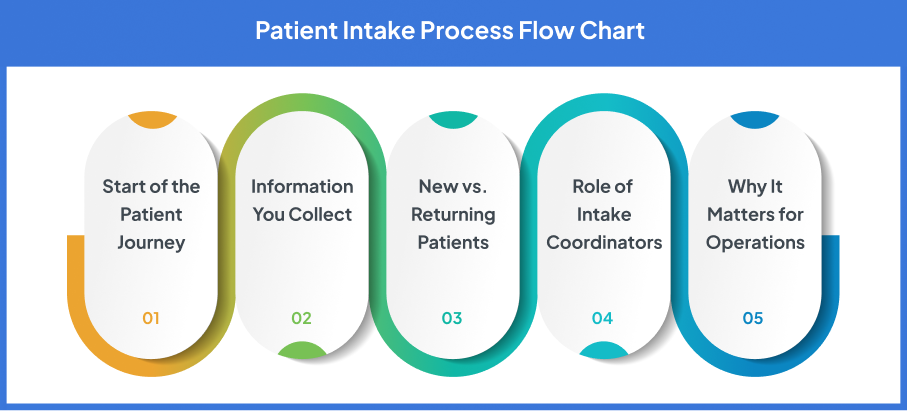
1. Start of the Patient Journey: Intake begins the care process. It helps you collect the essential information needed for correct records.
2. Information You Collect: You gather personal, medical, social, insurance, and payment details. These details help you build a clear and complete patient profile.
3. New vs. Returning Patients: New patients fill full forms and sign required consent papers. Returning patients only update old details and sign revised documents.
4. Role of Intake Coordinators: Coordinators guide patients through each step. They verify information, answer questions, and enter accurate data.
5. Why It Matters for Operations: A strong intake process reduces errors and prevents delays. It also improves workflow efficiency and enhances patient experience.
Patient Intake Meaning: Traditional vs. Modern
Patient intake is like the doorway to your practice. How you design it—traditional or modern—decides how easy it is to walk through.
➔ Traditional Patient Intake Process
The traditional intake process takes more time than you think. You deal with long forms, ID checks, and details that slow you down. Patients also need to call your office just to book their first visit. And then they come in to fill everything out again in person.
But this doesn’t always go smoothly. If a document is missing, you repeat the same steps again. This back-and-forth creates delays for you and your staff. Why does this matter? It takes your focus away from real patient care. You spend more time fixing paperwork instead of helping new patients.
➔ Modern Patient Intake Process
The modern intake process changes this for you. You use digital tools that make onboarding simple for everyone. Patients fill out their forms online before they visit your office. They also upload IDs and documents without needing to stand in line. This removes most of the manual work for your team. Your EHR pulls the information automatically. No extra typing. No extra checking.
Patients also feel more relaxed because they complete everything on their time. And here’s the best part: it reduces errors and saves hours for your staff. This means you get more time to focus on patient care. A smooth intake process helps you build a better experience from day one.
Common Challenges in Patient Intake Management
You might have encountered these challenges already. But you should know that they are the roadblocks of many practices.
♦ When the Front Desk Slows Down
Front desk issues show up faster than you expect. You see it when patients wait longer because forms take too much time. Your team tries to manage calls and paperwork together, but things slow down anyway. And that delay affects everyone in the room.
♦ Scheduling That Doesn’t Go as Planned
Scheduling adds another layer of stress. No-shows and last-minute cancellations break your plan for the day. The empty slots stay empty, and that means lost revenue you could have avoided.
♦ Manual Entry That Leads to Errors
Manual entry brings its own set of mistakes. When you enter every detail by hand, errors slip in easily. Sometimes it even creates duplicate records. And that makes the whole process confusing for both you and your team.
♦ Staff Burnout That Builds Over Time
Your staff also feels the pressure. Doing the same tasks every day takes away their energy. Answering calls, entering data, sorting files—none of it feels meaningful after a while. So burnout becomes a real problem.
♦ Reporting That Feels Harder Than It Should
Reporting doesn’t make things easier. You try to meet quality rules, but the process is slow and unclear. If your system isn’t built for simple reporting, you spend more time fixing issues than improving care.
Why Patient Intake Still Feels Slower Than It Should
Traditional intake may feel familiar, but it also creates slowdowns you don’t always see. Digital intake works differently. It removes the extra steps and makes the whole experience smoother.
| Traditional Patient Intake | Modern Digital Intake |
| Your staff spends time entering paper forms, taking focus away from patients. | Patients fill out forms online, giving staff more time for real care. |
| Typos, missing fields, and unclear writing cause errors and delays. | Patients enter their own details, keeping information clean and accurate. |
| Incomplete forms delay check-ins and require extra follow-ups. | Guided forms ensure all required fields are completed before submission. |
| Paper forms can be lost, damaged, and difficult to store. | Digital records stay organized, secure, and accessible anytime. |
| Confusing paper forms lead to incorrect or unclear information. | Digital forms are simple and structured for easy understanding. |
| Staff must frequently remind patients about missing details or documents. | Patients complete intake at home, reducing delays and follow-ups. |
| Long wait times create a poor first impression. | A smooth digital intake improves the overall patient experience. |
Patient Intake and Flexible Payment Options
Many patients slow down at the intake stage because they worry about the upfront cost of care. They hesitate to fill out forms or book their first appointment. And the reason is simple. They are unsure how they will afford the visit or the treatment plan.
This is where Denefits makes a difference. You can offer flexible payment plans right when patient information is collected. It helps them break the cost into smaller, manageable amounts. There are no credit checks, so almost every patient can move forward.
A higher approval rate also means fewer people stop at the financial discussion. With 95% approvals, most patients continue with their care instead of delaying it. Your practice still receives protected payments even if a patient misses an installment.
When Denefits is included in the intake process, the onboarding experience becomes smoother. Financial drop-offs reduce, and patients feel more confident about continuing their care plan.
The End Note
A smooth intake process helps patients feel settled before anything else begins. When the first step is easy, the rest of the visit naturally follows the same rhythm.
And if someone is worried about costs, options like Denefits quietly support them without slowing things down. In the end, intake isn’t just paperwork—it’s the moment that shapes how confidently a patient steps into care.
FAQs
1. What Is an Intake and How Does it Affect the Way My Practice Operates Daily?
Intake sets the first layer of information your team depends on. You should know, when this step is clear, your whole workflow becomes faster and more predictable.
2. What Is a Patient Intake Form and Can it Actually Reduce My Front-Desk Workload?
Yes, it can. This form collects the details upfront so your staff spends less time correcting missing or unclear information.
3. What Is an Intake Form and How Does it Support My Patient Onboarding?
It helps you build a full patient profile before the visit starts. This makes onboarding smoother because your team isn’t chasing documents later.
4. Intake Form Meaning Feels Confusing — What Does it Mean for My Patient Experience?
It simply means the form that sets the tone for the patient journey. When it’s organized, your patients move through your practice without frustration.
5. How Does the Home Health Intake Process Help My Team Prepare for Visits?
It lets your team review patient details before stepping into the home. You arrive prepared, and that reduces surprises during care.
6. PO Intake Meaning — Why Should My Staff Complete This Step Early?
Because PO Intake ensures all provider orders are captured correctly from the start. It prevents delays that happen when the team has incomplete instructions.
7. What Is an Intake Appointment and How Can it Improve My Scheduling Accuracy?
It’s the initial check-in where forms and consents are completed. When intake appointments are handled well, your entire day runs on time.
8. I Want to Understand Medical Intake — How Does it Impact My Care Quality?
Medical intake collects history, allergies, and medications early. This helps you avoid risks and deliver safer, more personalized care.
8. What Does Hospital Intake Mean for My Operational Flow and Wait Times?
Hospital intake handles ID checks, coverage verification, and forms. When streamlined, it cuts down waiting and improves how efficiently your team works.