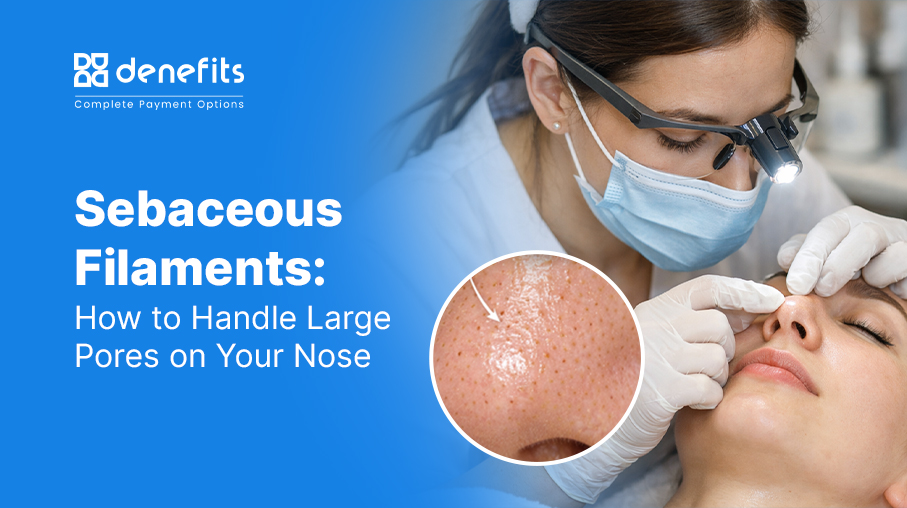
Stand close to a mirror in natural light, and you’ll see them — tiny dots scattered across the nose and sometimes the chin. They don’t hurt. They don’t feel raised, yet they draw attention. Many people assume they’re stubborn blackheads that refuse to go away.
So, What Are Sebaceous Filaments?
Sebaceous filaments are part of your skin pores. Inside each pore, oil travels from a gland beneath the surface to the outside layer of your skin. When oil moves through it, especially in areas that produce more sebum, the opening can look darker or more noticeable.
The goal isn’t to erase them. It’s to understand why they show up and how to keep them from becoming overly prominent.
What Causes Sebaceous Filaments?
Everyone has sebaceous filaments. But certain factors make them more noticeable.
1. Excess Oil
Overactive oil glands are the main reason. Your face has a very high number of sebaceous glands—up to 900 per square centimeter. That’s why areas like the nose and forehead get oily fast. When too much oil collects, it fills the pore. The filament stretches and becomes easier to see.
2. Hormonal Changes
Hormones directly affect oil production. During puberty, menstrual cycles, or stressful periods, oil levels can rise. Higher androgen levels signal the glands to produce more oil. The extra oil makes filaments look darker and more visible.
3. Aging and Loss of Elasticity
As you age, collagen levels drop, and skin becomes less firm. When the skin around a pore loosens, the pore appears larger. This makes sebaceous filaments stand out more than before.
4. Skin Type
Oily and combination skin types tend to show them more clearly. If you naturally have larger pores, oil has more space to collect. That buildup makes the dots easier to notice.
5. Thick Hair Follicles
Hair follicles and pores are connected. Thicker hair means larger follicles. Larger openings collect more oil and debris, which makes the filament appear darker or thicker.
6. Skincare Habits and Sun Damage
Over-washing can strip the skin. When that happens, your skin produces even more oil to compensate. Sun damage also weakens collagen. Over time, pores stretch and remain enlarged. This makes sebaceous filaments more obvious.
Sebaceous Filaments vs. Blackheads: Spotting the Difference
Sebaceous filaments are often mistaken for blackheads because they look similar. They both show up as small dots in the pores, especially around the nose and chin. But they are not the same thing. One is a normal part of your skin, and the other is a type of acne. Knowing the difference helps you treat your skin properly and avoid unnecessary products or harsh methods.
| Feature | Sebaceous Filaments | Blackheads (Open Comedones) |
|---|---|---|
| Appearance | Flat, sandy, or grayish-tan dots. | Raised, dark black "plug." |
| Structure | A tube-like path for oil to reach the surface. | A blockage of oxidized oil and dead skin. |
| Occurrence | Usually in oily areas like the nose and chin. | Can occur anywhere on the face or body. |
| Nature | Permanent and normal skin feature. | A form of acne that can be cleared. |
Sebaceous Filaments Removal: Can I Get Rid Of Them?
Sebaceous filaments cannot be removed entirely, but their appearance can be controlled with proper, consistent skincare.
- Use a gentle cleanser to remove excess oil from your face. Avoid harsh scrubs that can irritate and inflame your pores.
- Use salicylic acid as it has beta-hydroxy acid (BHA) that penetrates the pores to dissolve oil and debris. Look for a salicylic acid toner, serum, or cleanser to use a few times per week.
- Try retinoids as they help prevent pores from becoming clogged and improve the overall texture and appearance of your skin, making sebaceous filaments less noticeable.
- Don’t over-cleanse or over-exfoliate, as it strips your skin of oil, which can actually backfire.
- Use clay masks occasionally because they absorb excess oil and temporarily minimize the appearance of sebaceous filaments. Use them once or twice a week, not daily, to avoid over-drying your skin.
- Applying sunscreen daily protects your skin from sun damage. Choose a non-comedogenic, mineral-based formula for the best results.
Professional Treatments for Sebaceous Filaments
Here is a breakdown of professional treatments for blackheads and sebaceous filaments, categorized by how they work and what to expect.
| Treatment | How It Works | Best For | Downtime |
|---|---|---|---|
| Chemical Peels | High-concentration acids (Salicylic/Glycolic) dissolve the "glue" holding dead skin and oil together. | Deeply clogged pores and stubborn blackheads. | 1–3 days (mild redness or flaking) |
| HydraFacial | A "vortex-suction" tool vacuums out pores while simultaneously infusing skin with hydrating serums. | Instant clearing of sebaceous filaments and surface debris. | None |
| DiamondGlow | A diamond-tipped wand exfoliates the surface while high-powered suction unclogs the pores. | Improving skin texture while clearing pores. | None (temporary pinkness) |
| Retinoids | Prescription Vitamin A (Tretinoin) speeds up cell turnover so clogs can't form. | Long-term prevention and shrinking the "look" of pores. | 2–4 weeks (initial dryness/purging) |
| Laser Therapy | Fractional lasers or IPL target oil glands and boost collagen to tighten the pore structure. | Permanent texture improvement and "shrinking" large pores. | 3–7 days (depending on intensity) |
How Denefits Helps You Access Clearer Skin
While professional treatments such as HydraFacials, chemical peels, and laser therapy are the most effective ways to manage sebaceous filaments and large pores, the upfront cost of aesthetic procedures can sometimes be a barrier.
Denefits bridges the gap between your skincare goals and your budget by providing flexible, patient-friendly financing solutions. Here is how Denefits makes professional skin health more accessible:
1. Instant Financing for Professional Procedures
Many high-end treatments, such as Laser Therapy or a series of Chemical Peels, require multiple sessions to see lasting results. Denefits allows you to start your treatment immediately with flexible payment options. Instead of a large lump sum, you can spread the cost over manageable monthly payments.
2. No Credit Check Barriers
Unlike traditional medical financing that relies heavily on credit scores, Denefits focuses on inclusivity. We offer no-credit-check financing, ensuring that more people can access dermatological care and professional extractions without the stress of a credit pull.
3. Customized Payment Plans
Whether you are looking for a one-time HydraFacial to clear out sebum plugs or a long-term plan involving prescription-strength retinoids and follow-up visits, Denefits allows your provider to create a payment plan that fits your specific financial situation.
4. High Approval Rates
Denefits boasts high approval rates, making it easier for patients to say "yes" to the professional treatments that actually work.
FAQs: Everything You Need to Know About Sebaceous Filaments
1. How to Get Rid of Sebaceous Filaments?
You can't get rid of them forever. If you pull them out, they will refill within a few days. The goal is to make them less visible, not to delete them.
2. Are Sebaceous Filaments the Same as Sebum Plugs?
Not exactly. A sebum plug is different. It refers to a literal blockage or a clog. Filaments only look like dots when they overfill with oil and darken. One is a functional part of your skin; the other is a trapped obstruction.
3. Can I Use a Metal Blackhead Remover for Sebaceous Filament Removal?
No. Using metal tools at home is risky. You can burst tiny blood vessels or cause permanent scarring. This often makes your pores look even larger in the long run.
4. Why Is My Nose so Oily Even After Washing?
You might be over-washing. When you strip all the oil away, your skin panics. It produces more oil to compensate. This is called "rebound oiliness." Use a gentle, pH-balanced cleanser instead.
5. Can I Squeeze Them Out?
Avoid squeezing. It traumatizes the pore wall and can lead to infections or scabs. Constant squeezing stretches the pore, making the filament look thicker over time.
6. What Is the Best Way to Shrink Large Pores on the Nose?
To shrink pores, you have to keep them clear and tight. Use Salicylic Acid (BHA) to melt the oil inside. Apply Retinoids to speed up cell turnover. Most importantly, wear sunscreen. Sun damage destroys the collagen that holds pores tight. When collagen breaks down, pores sag and look much larger.